
Sustainable Dairy Farming Through Solar Power
In an era where sustainable practices are increasingly crucial, a dairy farm has made a significant stride towards energy independence and environmental stewardship. By installing a solar power system, the farm has not only reduced its carbon footprint but has also achieved remarkable cost savings. This case study delves into the specifics of the installation and its impacts on the farm’s operations, particularly during periods of load shedding.
System Specifications:
– Inverter: The heart of the solar power system is a robust 200 kW inverter. This inverter efficiently converts the DC electricity generated by the solar panels into AC electricity, which is usable for the farm’s operations. Its high capacity ensures that even the most energy-intensive processes, like milking and refrigeration, are seamlessly powered.
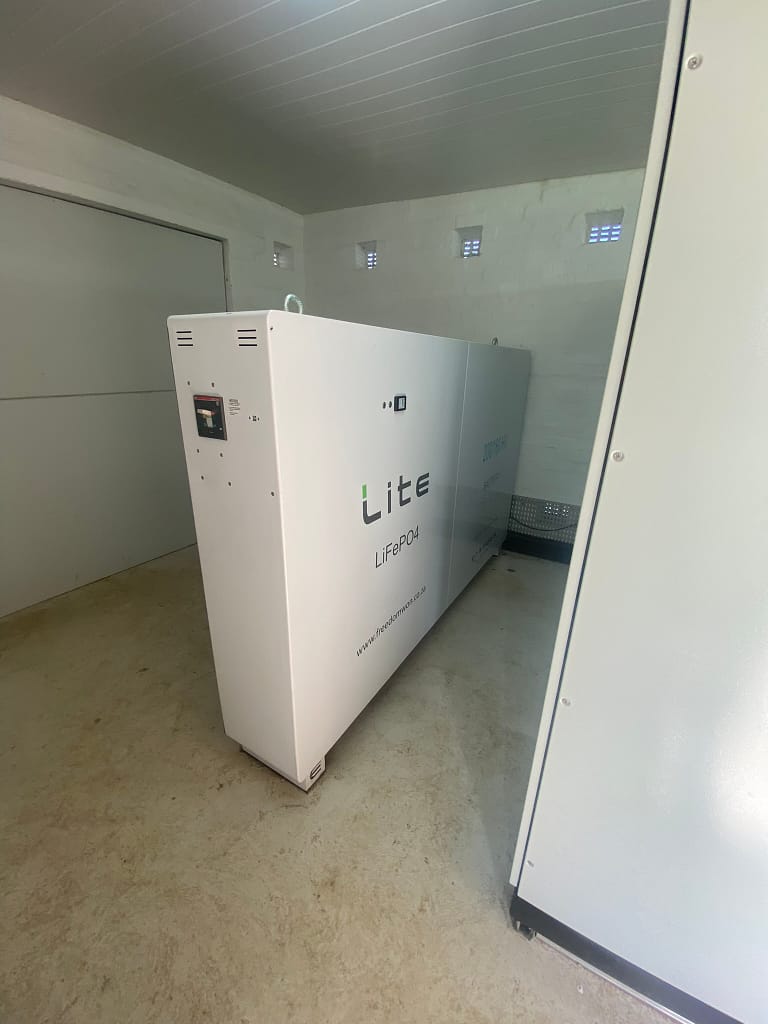
– Battery Storage: A key component is the 200 Ah Freedom Won battery. This high-capacity battery stores excess solar energy, ensuring a continuous power supply even when the sun isn’t shining. This is particularly beneficial during load shedding or at night, allowing the dairy farm to operate without interruptions.
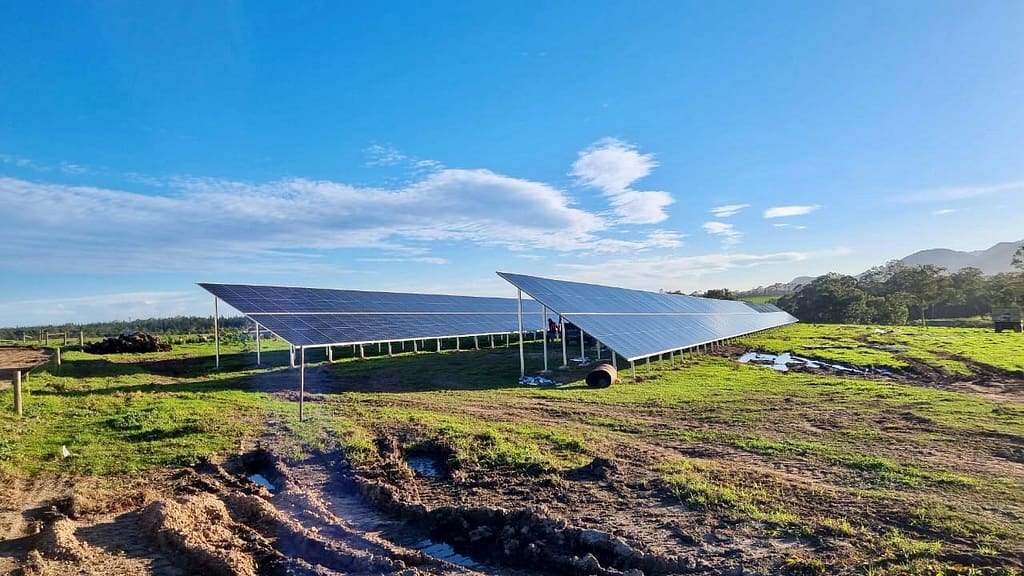
– Solar Panels: The installation includes 180 kWp of solar panels, strategically positioned to capture maximum sunlight. These panels are the primary source of power generation, harnessing renewable energy to run the farm’s operations.
Benefits:
1. Cost Savings on Electricity: By generating its own electricity, the farm has significantly reduced its reliance on grid electricity. This translates into substantial savings on electricity bills, a major operational cost for dairy farms.
2. Reduced Generator Use: Prior to the solar installation, the farm likely relied on diesel generators during power outages. The solar system, with its reliable battery backup, has minimized the use of these generators, leading to further cost savings and a reduction in emissions.
3. Uninterrupted Operations During Load Shedding: Load shedding can be particularly disruptive for dairy farms. The solar power system ensures that milking and other critical operations continue without interruption, maintaining productivity and the wellbeing of the livestock.
4. Environmental Impact: By utilizing solar energy, the farm significantly lowers its carbon emissions, contributing to a healthier environment. This move aligns with global efforts to combat climate change and promotes sustainable agricultural practices.
Conclusion:
The dairy farm’s investment in a 200 kW inverter system, coupled with a 200 Ah Freedom Won battery and 180 kWp of solar panels, exemplifies a forward-thinking approach to energy use in agriculture. This installation not only yields economic benefits through reduced electricity and generator costs but also ensures operational continuity during load shedding. Moreover, by embracing renewable energy, the farm sets a precedent in environmental responsibility, positioning itself as a leader in sustainable dairy farming